AI FIELD NOTES · WORK SMARTER · STAY HUMAN
The age of doing everything yourself is over.
You run the business. Let AI handle more of the work.
I’m Jennifer Diamond. I’ve spent 20+ years working with global consumer & emerging brands in marketing, ecommerce and data. Now I research, test and build with AI, creating custom practical systems for small business owners and entrepreneurs.
Ready to see what AI can do for your business?
“The real competitive advantage with AI comes from having business leaders who can bridge business problems with the possibilities technology offers.”
What this looks like:
FOR YOU
Yes your home can have an executive assistant.
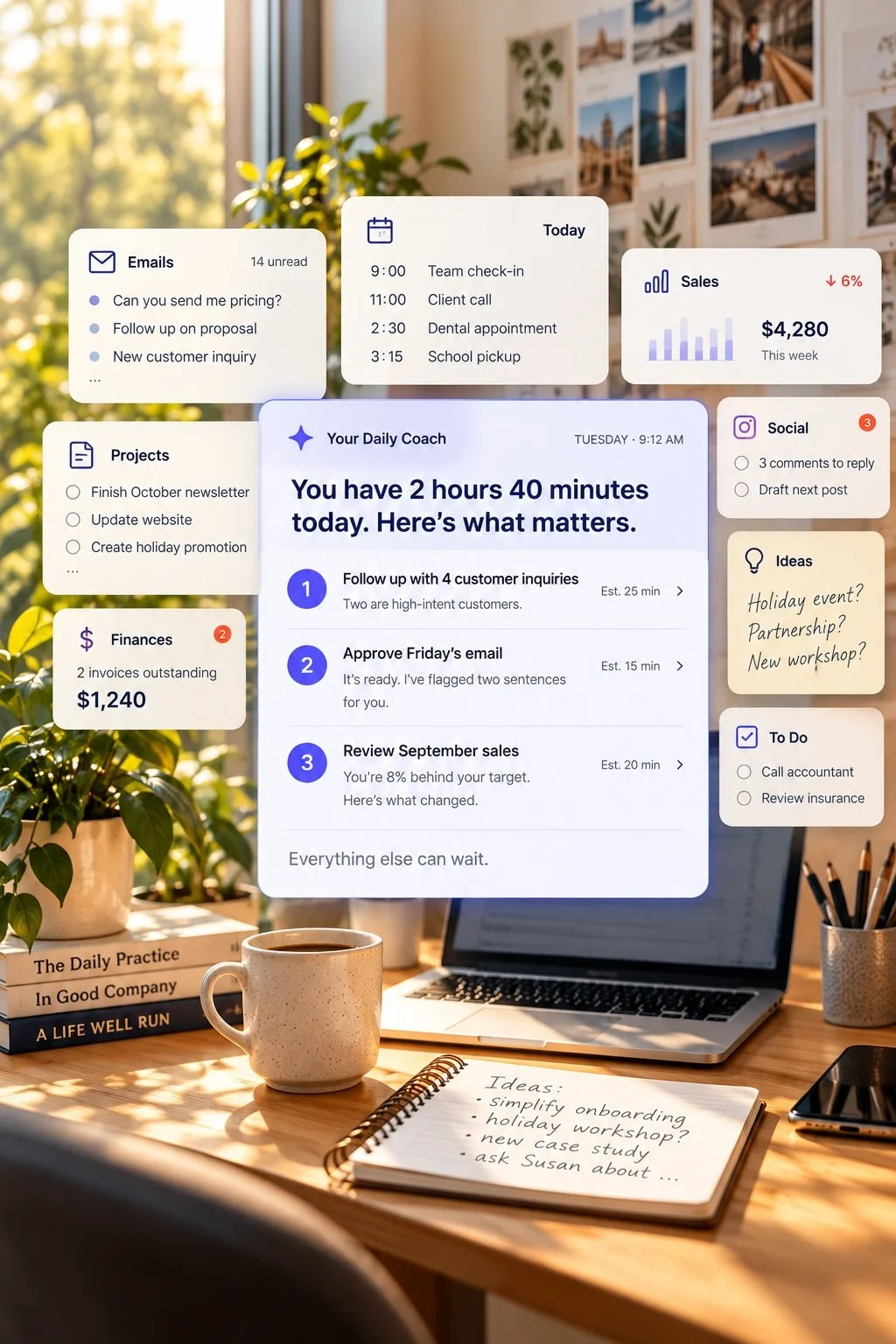
For busy people who work from home and keep a household running. Build a daily coach, a home assistant, a plan for your kids' summer break. AI can’t do your laundry yet but it can give you some time back.
USE CASES:
A daily coach for Christine, mother of 3
A Transcript optimizer for Jessica, mother advocating for her child with ADHD
A garden planting assistant for Ann
FOR YOUR BUSINESS
Get help running your solo business.
For solo founders and small business owners who are also the marketing team, the admin team and the bookkeeper. I’ll help you create custom AI assistants that will take the repetitive work off your plate, using your data, your priorities and your comfort level.
USE CASES:
An AI marketing team for Susan, a small jewelry business owner
An AI writing partner for Christine, a busy hair salon owner and stylist
FOR YOUR TEAM
Your company brought in AI. Now what?
Understanding how to integrate AI into your role will help you stay relevant. I’ll show you how to use it confidently within your existing workflows, based on my real experience and practical tests, while supporting your very real - and necessary - subject matter expertise.
USE CASES:
An agent supporting customer service reps at a National bank chain
A meeting optimizer for a system analyst at a national Shoe brand tasked with training employees on a new system.
See What I’ve Built:
I’m an AI Experimentation & Workflow Strategist focused on how nontechnical professionals use AI to think through complicated work. I run practical tests, study emerging research, and translate the results into straightforward guidance for people and organizations.
AI Researcher & Workflow Strategist — Mellonhead
I build generative AI workflows for corporations and non-profits, grounded in research and real-world testing.
I've built new and restructured workflows from the ground up: fixing the data architecture underneath, documenting the logic so it's repeatable, and handing off something a team can actually run without me.
Consumer Data Leadership — L'Oréal
Two decades in consumer-facing industries, most recently 6 years leading data strategy across L'Oréal's luxe fragrance and beauty portfolio — Prada, Valentino, Ralph Lauren, Pureology. I know what it looks like when a large organization tries to turn data into a real decision, not just a dashboard.
I live and work in Brooklyn, NY, exploring DUMBO and Red Hook by bike, enjoying bookshops and open art studios.
It’s my goal to support and empower women in business. Let’s meet for coffee. If you’re an entrepreneur, an artist, a working mom, if I can lend advice, ideas, inspiration or any tools and connections, I’d be happy to.
About me
AI Tool stack:
Copilot Enterprise
Claude Cowork
Claude Code
ChatGPT
Gemini
Microsoft 365
Notion Agents
Ecommerce platforms:
Shopify, Squarespace